As the snow melts and the temperatures shift, many homeowners start to notice a frustrating seasonal soundtrack—a noisy garage door. After months of battling freezing temperatures and road salt, your door might be protesting the change in weather with squeaks, rattles, or grinds.
Understanding what those sounds mean—and how to address them—can save you from a costly emergency repair down the road. Let’s have a look at why your garage door might be noisy this spring.
Match the Noise to the Cause
Before you grab your toolkit, listen closely. Your garage door is trying to tell you exactly what’s wrong:
- Squeaking or Screeching: Usually signifies dry rollers, hinges, or pulleys that are desperate for lubrication.
- Rattling: Often caused by loose hardware, bolts, or vibrating parts that have wiggled free over the winter.
- Grinding or Scraping: This typically points to metal-on-metal contact, likely from a misaligned track or worn-out rollers.
- A Loud Bang or Pop: This is a warning sign of a failing or broken torsion spring. Caution: Do not attempt to fix springs yourself.
- Opener Hums but Struggles: The motor is working, but the door is likely out of balance, or the tracks are obstructed.
Why Does Spring Trigger These Noises?
It isn’t just a coincidence. The transition from winter to spring creates the perfect storm for garage door issues:
- Temperature Swings: Metal components expand and contract as the weather warms up, which can shift the alignment of your tracks.
- Dried Lubricant: Winter air and road salt can dry out or “gunk up” the grease on your moving parts, leaving them brittle and noisy.
- Hardware Fatigue: After lifting a heavy, ice-laden door all winter, bolts and brackets often loosen under the strain.
Top Causes of Spring Noises
1. Dry Rollers and Hinges
Moving parts need the protection of lubricant to work effectively. When they dry out, the friction creates that high-pitched squeal.
2. Loose Hardware
Between the vibrations of the opener and the shifting temperatures, the nuts and bolts holding your tracks and hinges together can loosen. This leads to a persistent rattling every time the door moves.
3. Dirty or Misaligned Tracks
During the winter, salt, slush, and debris get kicked up by your car tires and settle in the tracks. This buildup causes the rollers to jump or scrape as they pass through.
The Maintenance-First Fix: A Spring Checklist
You can often silence a noisy garage door in spring with a few simple maintenance steps:
- Clean the Tracks: Use a damp cloth to wipe out the inside of the tracks. Pro Tip: Never apply grease to the tracks themselves; it actually traps dirt and makes the problem worse.
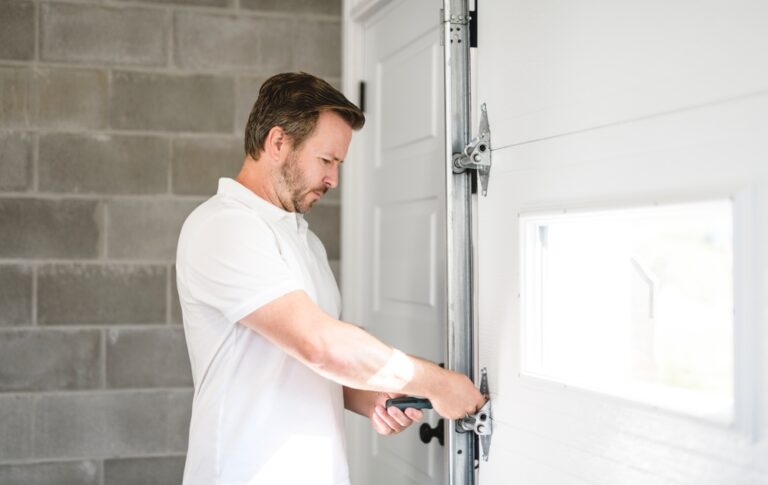
- Tighten the Hardware: Use a socket wrench to snug up any loose bolts on the hinges and track brackets.
- Lubricate the Right Parts: Apply a specialized garage door silicone or lithium-based spray to the hinges, rollers (ball bearings), and the length of the springs.
- Test the Balance: Pull the emergency release cord and lift the door halfway by hand. If it stays in place, it’s balanced. If it slams down or shoots up, your springs need professional adjustment.
When to Call a Professional
While DIY maintenance is great, some symptoms require an expert eye for safety reasons:
- Cracked or Flat-Sided Rollers: These need replacement to prevent track damage.
- Frayed Cables: A snapping cable can be extremely dangerous.
- The Door Feels Heavy: This indicates your springs are no longer doing the heavy lifting, putting immense strain on your opener.
Don’t Let Your Noisy Garage Door Get You Down This Spring! Call in the Pros
Don’t let a noisy door turn into a broken one. If your garage door is shaking, uneven, or simply too loud to ignore, the team at Overhead Door Company of Calgary™, Lethbridge™, and Cranbrook™ is here for you. We specialize in identifying the subtle issues that DIY checks might miss, and provide comprehensive garage door repair services across Calgary, Lethbridge, and Cranbrook.
Don’t wait for a complete breakdown to deal with your noisy garage door this spring. Whether you need a professional lubrication service, spring tension adjustment, or a full hardware inspection, we have the tools and experience to take care of it. Contact Overhead Door Company of Calgary™, Lethbridge™, and Cranbrook™.
FAQs
What lubricant should you use on a garage door?
Avoid WD-40 for lubrication (it’s a degreaser). Use a silicone-based spray or white lithium grease specifically designed for garage doors.
Why should you not grease the tracks?
Grease acts like a magnet for dust and hair. Over time, it creates a thick sludge that can cause the rollers to slide instead of roll, leading to flat spots.
How often should you lubricate your garage door?
Ideally, twice a year, once in the fall to prepare for the cold, and once in the spring to recover from it.